

The Extended Producer Responsibility (EPR) for Construction Products and Materials in the Building Sector represents a major turning point in waste management within the construction industry. This initiative is part of an environmental strategy aimed, in particular, at improving therecovery¹ andreuse² of construction products and materials.
In this article, we discuss the challenges of thePMCB3 Extended Producer Responsibility (EPR) program, its benefits for project owners, and best practices for optimizing its effectiveness.
To learn more about how the PMCB EPR works and the free take-back program, see our previous article:
Table of Contents
Issues
Understanding the Key Issues
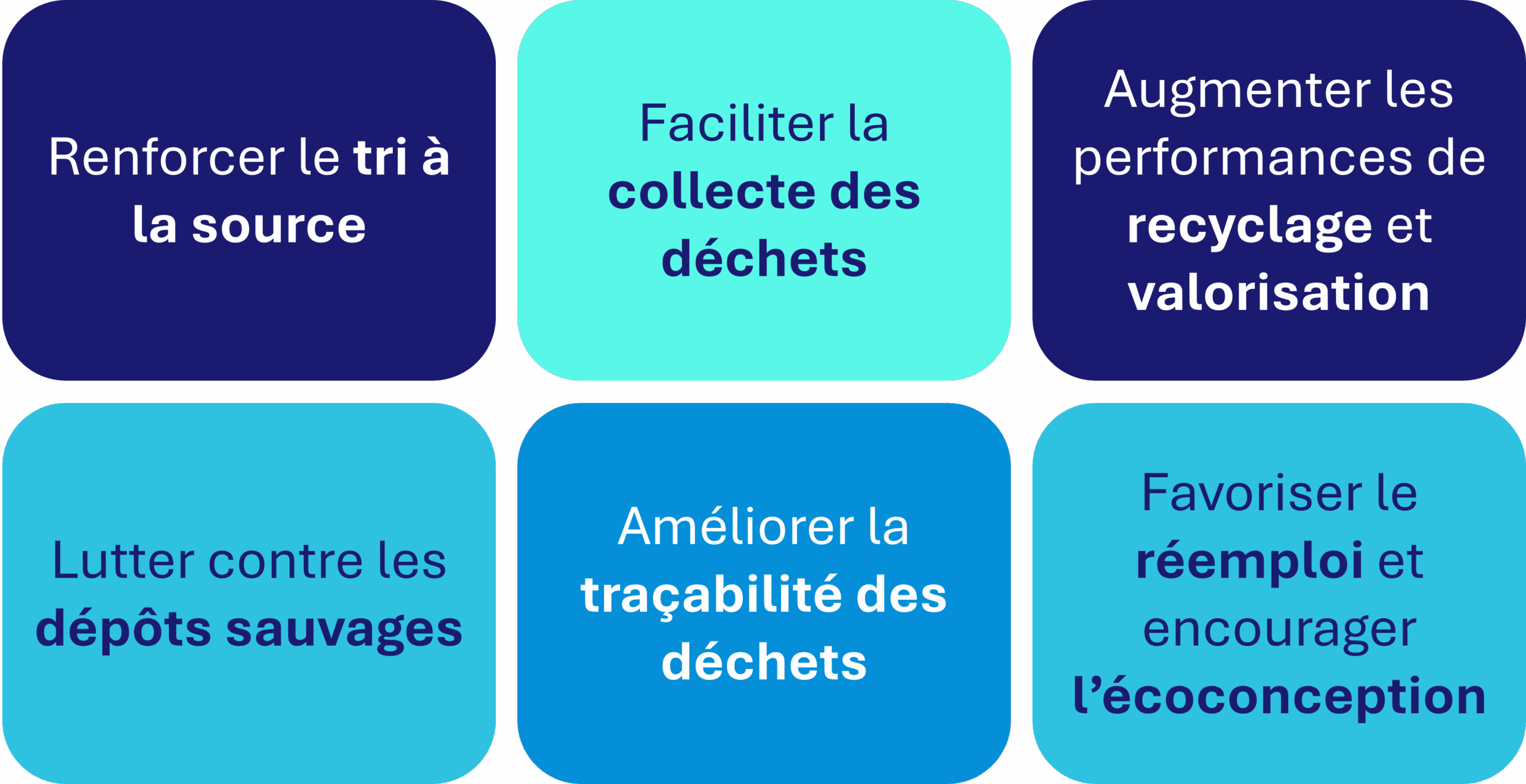
The PMCB EPR aims to promote a model circular by promotingthe the reuse of materials and by encouraging reuse. It addresses various challenges:
Benefits for the Project Owner
Why is the REP a strategic asset?
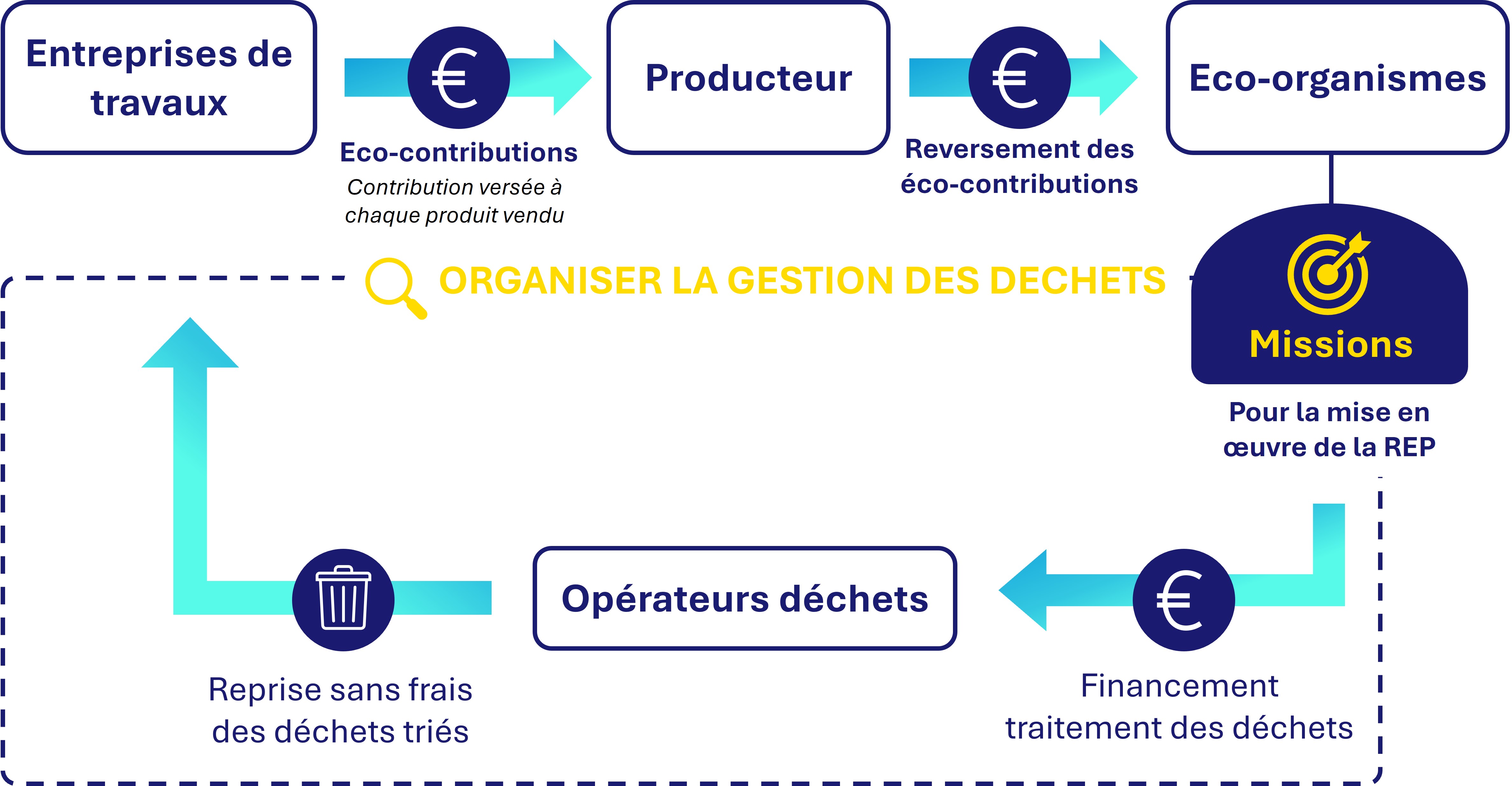
EPR has proven to be a financial lever for those who fully grasp its implications. Through various financial support mechanisms—such as free waste collection, sorting incentives, calls for projects, and training grants—EPR enables project owners4 to realize cost savings in the management of demolition waste streams. The flagship measure of the PMCB EPR—the free collection of sorted waste—enables companies to achieve considerable savings onprocessing costs. Simulations based on our internal calculator show that the savings generated through the EPR are in the range of €2 to €6 per square meter, and sometimes more.
In addition to the direct savings achieved in waste management, the PMCB EPR program offers a range of financial incentives designed to support businesses in implementing circular economy practices. This support includes specific incentives to encourage waste sorting at the source, as well as calls for proposals to fund innovative initiatives in recycling, reuse, and material recovery. These incentives help businesses realize savings by offsetting any additional costs associated with the transition and changes in practices.
Funding is also available for training programs designed to strengthen teams’ technical skills in the area of the circular economy.
Focus
Synergies with the PEMD assessment
There is genuine synergy between the PMCB Extended Producer Responsibility (EPR) program and thePEMD6 diagnostic tool. Since they share the same objective, data flows between the two, thereby improving waste management performance, particularly in terms of sorting and recovery.
① Common Goal
The PEMD assessment and the PMCB REP share a common goal: to improve waste recovery and product reuse.
- The PEMD assessment makes it possible to identify reusable resources as early as the project design phase and to plan waste management in advance, thereby setting recovery targets.
- The PMCB EPR program, for its part, is implementing a free take-back system for sorted waste, promoting its management at a lower cost. This take-back system encourages effective sorting at the source, thereby enhancing subsequent recovery performance. The EPR program also promotes reuse by supporting and mobilizing stakeholders with the goal of making the practice widespread.
In short, these two approaches complement each other to optimize the management of mineral deposits by maximizing reuse and recovery.
② Data Flow
By providing a projected estimate of waste by waste stream type, the PEMD assessment plays a fundamental role in organizing source separation under the PMCB Extended Producer Responsibility (EPR) program. Ideally, the data from the PEMD assessment should be shared throughout the project, particularly within the SOGED4system , which serves as the operational link between the EPR program and the assessment. This document should serve as a management tool to facilitate the recovery of materials from demolition sites. It enables the translation of information from the PEMD into concrete actions on-site by quantifying the waste generated and precisely defining the management methods to be implemented.
The SOGED includes several key elements that are already included in the PEMD assessment, including: an estimateof waste volumes, planned disposal methods, waste prevention methods, and, finally, sorting methods.
SOGED7 ensures the smooth flow of data between the PEMD assessment and the implementation of the PMCB EPR on the construction site. It helps ensure optimal waste management throughout the project and enables the achievement of recovery and reuse targets.
Best Practices
How can we optimize the REP?
To take full advantage of the benefits of the PMCB Extended Producer Responsibility (EPR) program, the project owner must develop a new approach to managing materials leaving its construction sites.
① Conduct a high-quality PEMD assessment
The PEMD (Products, Equipment, Materials, and Waste) assessment must be conducted thoroughly in order to plan for waste management. It provides valuable data for organizing effective sorting, which is essential for optimizing recovery processes.
② Incorporate REP sorting requirements into contractual documents
It is important to formalize sorting obligations in contractual documents as early as the consultation phase. This helps ensure that construction companies comply with the PMCB EPR requirements and guarantees their implementation on-site.
③ Make the SOGED a Truly Effective Management Tool
SOGED should not be merely an administrative document, but rather a planning tool that guides technical and organizational decisions to achieve resource recovery objectives.
④ Ensure the flow of data throughout the project
The information originally derived from the PEMD assessment is shared and updated among all project stakeholders—project management, project management consultants, and contractors—to facilitate coordination and adjust actions based on the identified opportunities.
Conclusion
Key Takeaways
LThe REP PMCB offers a real opportunity for building owners to reduce their costs while improving the environmental performance of construction projects. Using data from the PEMD assessment, the project owner can maximize the benefits of Extended Producer Responsibility (EPR) by estimating savings in treatment costs and by organizing waste management at construction sites.
Coming Soon
To be continued in the next episode
In an upcoming article, we will explore data flow in detail, illustrating it with a practical example.
In the meantime, feel free to follow our posts on LinkedIn:
Training
To learn more...
To deepen your understanding of the PMCB Extended Producer Responsibility (EPR) program and learn how to use it as an operational and financial tool to support your demolition projects, we offer a training course dedicated to this topic. You can find all the details on our training page.
1Recovery: According to ADEME, recovery “includes reuse, recycling, or any other action aimed at obtaining reusable materials or energy from waste (Law of July 13, 1992).” (BâtiZoom, online)
2Reuse: “Any operation by which substances, materials, or products that are not waste are used again for the same purpose for which they were originally designed.” (Article L541-1-1 of the Environmental Code)
3REPPMCB: The acronym REP PMCB stands for Extended Producer Responsibility for Construction Products and Materials in the Building Sector.
4MOA: The acronym MOA stands for “Maîtrise d’ouvrage.”
5Treatment Costs: Treatment costs refer to the costs of recovery or disposal operations (they do not include the cost of renting dumpsters or the cost of transporting waste).
6PEMDAssessment: “The PEMD assessmentprovidesinformation on the products, equipment, materials, and waste expected to result from these demolition or major renovation projects, with the primary goal of reusing them or, failing that, recycling them.” (Ministry of Ecological Transition, online)
7SOGED: The acronym SOGED stands for "Waste Organization and Management Plan."